Britain forcibly evicted 1,500 islanders in the 1960s–70s. Fifty years later it agreed to pay £34.7 billion (not the £3.4bn cited to Parliament) to hand back sovereignty, bypassing seven oversight bodies, while the network that built the deal was connected by personal friendships, shared chambers, suppressed meeting minutes, and classified document access granted weeks before any formal appointment.
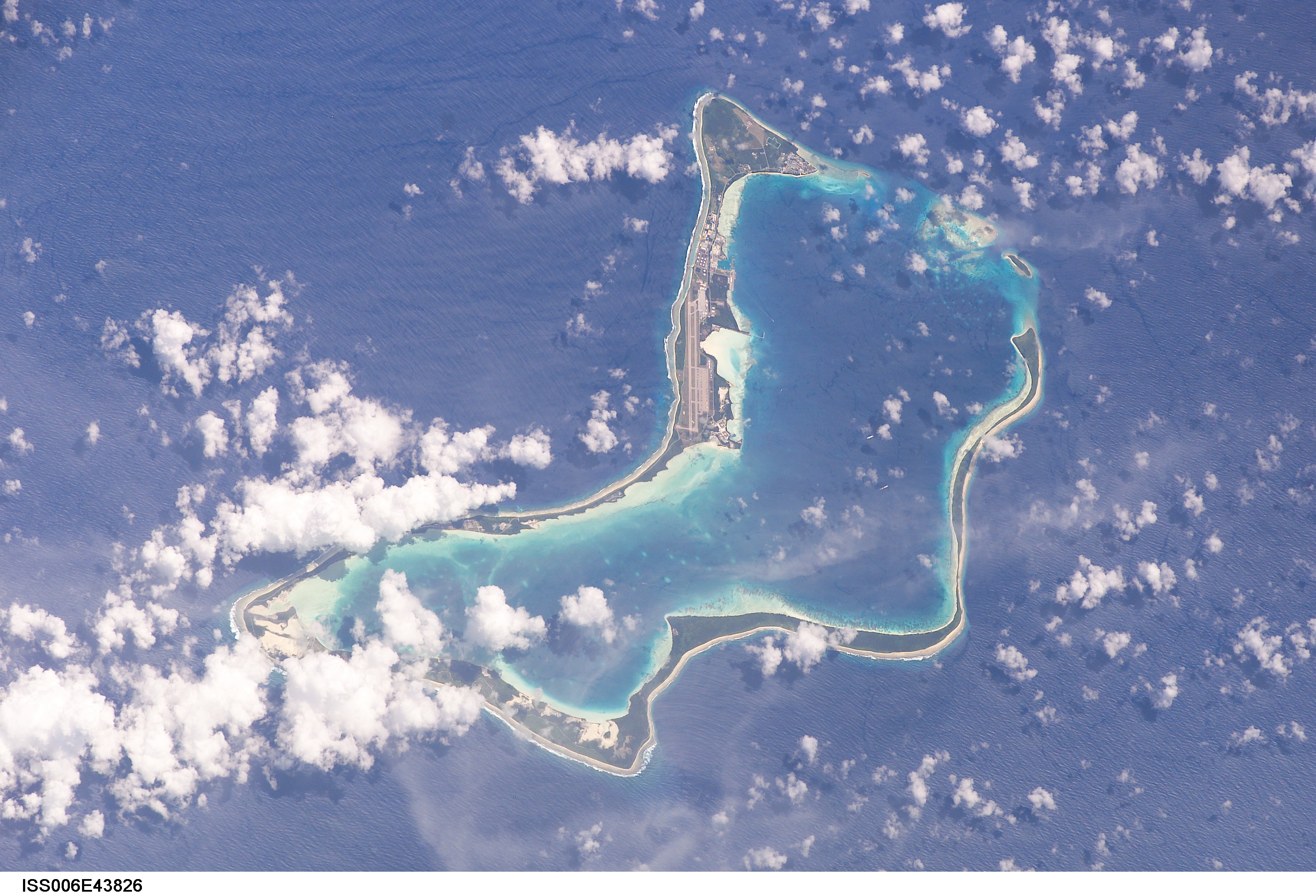
Britain forcibly removed the entire population of the Chagos Islands between 1968 and 1973. Roughly 1,500 Chagossians, a settled community of several generations, were told their homes no longer existed. Their dogs were rounded up and gassed. Their belongings were abandoned. They were shipped to Mauritius and the Seychelles, where many ended up in poverty. The British government told Parliament at the time that the islands had no permanent inhabitants.
The purpose was to clear Diego Garcia for a US-UK military base. That base, now home to B-2 bombers and nuclear-capable submarines, remains one of the most strategically significant installations on earth.
In 2019 the UN General Assembly voted 116–6 that Britain's occupation of the archipelago was unlawful and should end within six months. The International Court of Justice issued an advisory opinion the same year: the UK had no valid sovereignty claim. This is the legal context in which the 2024 deal was negotiated; the legal threat, it later emerged, was never as binding as ministers had stated.
The deal announced in October 2024 hands sovereignty to Mauritius while leasing Diego Garcia back to the UK and US for 99 years. The cost: what ministers told Parliament was £3.4 billion. The figure released via FOI from the Government Actuary's Department is £34.7 billion.
The surviving Chagossians and their descendants were excluded from all eleven rounds of the sovereignty negotiations. The humanitarian framing, that this deal secures their right of return, is complicated by one disclosed fact: the first three years of payments, £165 million per year, have been confirmed by the Mauritius Prime Minister as earmarked for Mauritius's national debt, not resettlement. A Chagossian protest outside Parliament on 12 November 2024 drew hundreds of people. The next day, the Attorney General met Mauritius's paid legal counsel in a meeting whose minutes the government has since refused to release.
Nominal payments over 99 years (Government Actuary's Department via FOI, August 2025). Inflation-indexed from year 14. Ministers cited £3.4bn NPV throughout 2023–24. No OBR scoring. No Treasury VFM review on the public record.
The treaty does not prohibit civilian Chinese infrastructure on the outer islands. Peros Banhos sits 140 miles from Diego Garcia, outside the treaty protection zone. China holds $1.4bn in Mauritius loans and a $73.7m Huawei surveillance network there.
OBR, Treasury, ISC, JCNSS, Parliament, plus 1,500 Chagossians excluded from all eleven negotiating rounds. NSA Powell refused JCNSS appearance — first since 2010.
Each exhibit describes something that happened, documented from primary or confirmed secondary sources. Confidence levels reflect source count. The facts in each case are largely agreed. The argument is about what they mean together.
On 13 November 2024, Attorney General Richard Hermer KC met Philippe Sands KC and Dapo Akande KC privately. The government subsequently refused a Freedom of Information request for the minutes under Section 36 FOIA, a ministerial exemption rarely invoked.
Before publishing that refusal, the Attorney General's own office gave Philippe Sands advance private notice of the forthcoming decision and invited him "to raise any factors or considerations" that might bear on withholding the information. Hermer's Special Adviser telephoned Sands separately about a journalist's enquiry into the same meeting. Sands told the SpAd he does "not comment on such matters."
Throughout this, Sands was still on Mauritius's retainer as paid Chagos chief legal adviser. His retainer did not end until December 2024.
Throughout 2023–24, the government's stated rationale for urgency was that Britain faced an imminent International Court of Justice ruling that would strip it of BIOT sovereignty. This was repeated in ministerial statements, press briefings, and parliamentary answers.
UNCLOS Article 298 allows any state to exclude military activities disputes from ICJ jurisdiction by declaration. The UK made precisely such a declaration. This opt-out covers Diego Garcia. An ICJ challenge based on UNCLOS jurisdiction was never legally viable against a state that had filed Article 298 exclusions covering the relevant activity.
In September 2025, this was admitted in Parliament. The government never corrected its earlier claims to the House, nor to the public.
On 29 August 2024, Jonathan Powell, then a private citizen and CEO of Inter Mediate, emailed the FCDO requesting a "low classification version" of the note from a meeting between Starmer, Lammy and the Mauritius Prime Minister.
The specific wording, "low classification version," is the tell: requesting a declassified copy of a document only makes sense once you have read the classified original. Powell was formally appointed as Chagos Envoy on 6 September 2024, eight days after that email, by which point FCDO had been corresponding with him at his private Inter Mediate address for four weeks.
Jonathan Powell draws a salary of £190,001–£200,000 per year from Inter Mediate (IM01 Ltd), confirmed via Companies House primary source. While serving simultaneously as Chagos Envoy and National Security Adviser, he remained on the Inter Mediate payroll.
Inter Mediate received £826,259 in government grants in the year to March 2025, covering Powell's active envoy period, confirmed via Charity Commission accounts. A further £700,000 grant commitment was reportedly awarded within three days of the Diego Garcia bill passing Parliament. The £700k commitment has not been independently confirmed at source; the total grant figure is primary-source confirmed.
In September 2018, Akande appeared as Counsel for Zambia in the ICJ Chagos advisory proceedings, arguing against the UK's jurisdictional objections. Zambia's position aligned with Mauritius; the advisory opinion went against the UK.
The Chagos deal was announced 3 October 2024. Akande's ICJ election brochure was published 22 October 2024, nineteen days later. The UK had not held an ICJ seat since 2017, when Christopher Greenwood lost re-election to the same bloc of African and small-island states that had voted for the Chagos referral.
Akande was present at the 13 November 2024 private meeting with Hermer and Sands. The minutes of that meeting are suppressed. His ICJ election is scheduled for autumn 2026. Mauritius holds a vote.
The OBR confirmed via FOI it was never consulted. The Treasury has not confirmed any value-for-money assessment was conducted. The Intelligence and Security Committee never scrutinised the deal (confirmed from ISC annual reports 2023–2025). Jonathan Powell refused to appear before the JCNSS when requested, the first National Security Adviser to decline since 2010. No parliamentary ratification debate was held. None of the 1,500 Chagossians most directly affected were included in any of the eleven negotiating rounds.
Ministers cited a figure of £3.4 billion NPV throughout public debate. The Government Actuary's Department figure, released via FOI in August 2025, is £34.7 billion nominal, a tenfold discrepancy that was never corrected.
Click any card for the full profile. String colour: gold = personal relationship confirmed, red = financial or improper contact, blue = CCP-adjacent channel.
"The Chagos plan was all Powell's."
— Anonymous No.10 political adviser, Guido Fawkes, February 2026Meeting minutes:
▶ FOI REQUEST REFUSED — Section 36, Freedom of Information Act 2000 — Ministerial veto applied by the Attorney General's own office
6 August 2024: FCDO begins emailing Powell at his private Inter Mediate address; at this point he holds no government appointment and remains a private citizen and CEO of Inter Mediate.
29 August 2024: Powell emails FCDO requesting "low classification version" of the Starmer-Lammy-Mauritius PM meeting note — eight days before appointment, with wording that confirms he has already seen the classified original.
6 September 2024: Powell formally appointed as Chagos Envoy.
20–22 September 2024: Powell in Beijing, chairing the "US-China Strategic Security and Stability Dialogue (Track II)" at the Grandview Institution, fourteen days into his Chagos envoy role. Grandview's own website states it accepts research commissions from "relevant government decision-making bodies as well as several Chinese government departments." Its founder is a former Xinhua correspondent who served in Pyongyang.
March 2024: Powell met the CPAFFC (Chinese People's Association for Friendship with Foreign Countries). The US State Department has designated CPAFFC as a body "tasked with co-opting subnational governments" and identifies it as a documented CCP United Front Work Department instrument. This meeting occurred before Powell's Chagos appointment and before the July 2024 election.
Inter Mediate and Grandview: continued meeting in London and Jiaxing, Zhejiang through 2025, after Powell had taken the National Security Adviser role. Inter Mediate's Lord Anderson (chair) has separately publicly stated he trusts the Chinese Communist Party.
As National Security Adviser, Powell holds a Special Adviser (SpAd) appointment rather than a permanent civil service post. This affects which bodies he can formally direct. His exposure to UFWD-designated organisations in the months preceding and during his government service has not been publicly scrutinised. The ISC, which exists to ask these questions, did not examine the Chagos deal or Powell's appointment.
The National Security Vetting review that would normally precede NSA appointment, and the timeline of Powell's Developed Vetting (DV) clearance relative to his classified document access in August 2024, are both unknown.
September 2018: Dapo Akande appears at the ICJ as Counsel for Zambia in the Chagos advisory proceedings. Zambia's submissions argue against the UK's jurisdictional objections. The advisory opinion, issued in 2019, goes against the UK — the same outcome Akande's submissions supported.
2017: co-authors EJIL journal posts arguing for ICJ jurisdiction over UK objections in the same proceeding.
UK loses ICJ seat to Christopher Greenwood in 2017 re-election. The African and small-island-state bloc, which had just voted for the Chagos referral, votes against Greenwood. Britain has had no ICJ judge since.
3 October 2024: Chagos deal announced.
6 September 2024: UK announces Akande as ICJ candidate (three weeks before the deal; brochure published 22 Oct, 19 days after).
13 November 2024: Akande attends private meeting with AG Hermer and Philippe Sands. Minutes suppressed.
ICJ election: autumn 2026. Mauritius votes. The same African and small-island-state bloc whose goodwill the Chagos deal was in part supposed to generate — votes.
When Greenwood lost in 2017, his post-mortem in the European Journal of International Law identified the African and small-island bloc as the decisive factor — and that bloc had voted, weeks earlier, for the Chagos referral. Britain has had no ICJ judge since. Akande's candidacy was announced six weeks after the deal that gave those states their principal diplomatic goal; his election in autumn 2026 requires their votes; and Mauritius itself holds one. Whether there is a formal connection between the deal and the candidacy, or between either of those events and the 13 November meeting, is precisely what the suppressed minutes might resolve.
"The UK has gone without an ICJ judge since 2017. The same states that voted against Greenwood will vote in 2026."
— Implied from Greenwood's 2017 EJIL post-mortem and ICJ electoral recordsChinese Ambassador to the UK: "Massive congratulations" on deal completion (confirmed on record, 2024).
January 2026 Chinese commentary: explicitly framed US opposition to the Chagos deal as "hegemonism" and directly linked Chagos to Taiwan — treating the deal as a precedent for China's own territorial disputes and framing it as a condition of Mauritius's continued alignment with Beijing's positions.
Huawei Safe City contract: $73.7 million, deploying 4,000 surveillance cameras across Mauritius. Confirmed contract detail. The critical point: data flows to Mauritius Telecom as custodian — not to Mauritius Police. India's Research and Analysis Wing issued a formal warning that this infrastructure creates intelligence exploitation opportunities for PLA Indian Ocean operations. Mauritius Telecom ownership includes partial Chinese state-linked stakes.
Peros Banhos: Reported by Guido Fawkes (October 2025) that China had offered to purchase Peros Banhos — a BIOT outer island — for $10 billion. Government denied this ("absolute nonsense"). No second independent source has confirmed the report.
The strategic facts are, however, confirmed: Peros Banhos is approximately 120–140 miles from Diego Garcia. It falls outside the 24-nautical-mile protection zone specified in the treaty. The treaty as signed does not prohibit civilian infrastructure — Chinese or otherwise — on the outer islands. Philippe Sands raised a Mauritius flag there in February 2022 and tweeted about it; China Daily preserved the video.
Each absence below is documented from official records, FOI responses or committee reports. None is an inference.
These are not rhetorical. Each is a specific factual gap that could, in principle, be answered by documents that exist and have not been released.
Who authorised Powell's access to the classified PM-level meeting note on 29 August 2024, three weeks before his formal appointment?
The FCDO Developed Vetting timeline and which official approved the early disclosure have not been published. The Ministerial Code does not provide for pre-appointment classified access to a sitting PM's meeting notes.
What was discussed at the 13 November 2024 meeting, and who in the AG's office decided to notify Philippe Sands before the FOI refusal was published?
The Section 36 FOIA veto is ministerially authorised. The decision to give Sands advance notice and invite his representations on the grounds for withholding the information is documented but the decision trail within the AG's office has not been published.
If the UNCLOS Article 298 opt-out made an ICJ challenge legally unviable, who briefed ministers in 2023–24 that the threat was imminent — and did the Attorney General advise on this before or after his appointment?
Hermer was appointed AG in July 2024. The legal threat was cited as a driver of urgency from at least 2023. The source of the legal assessment used to justify that framing is not on the public record.
Was Inter Mediate's £700,000 grant commitment formally approved before or after the Diego Garcia bill passed, and was a conflict of interest registered?
The £826,259 in confirmed grants during Powell's envoy period is on the Charity Commission record. The additional £700k commitment, reportedly timed within 72 hours of the bill passing, has not been independently source-confirmed, and Powell's conflict of interest registration with the Cabinet Office Ethics Adviser has not been disclosed.
With the deal now paused, will Akande's ICJ candidacy proceed, and will the UK government disclose whether there was any formal or informal link between the deal and his nomination?
The candidacy brochure was published 19 days after the deal. Britain has been without an ICJ judge since 2017. The autumn 2026 election is contingent on the same African and small-island-state bloc whose votes the Chagos deal was partly designed to secure. Mauritius holds one. The deal is paused. The candidacy, as of April 2026, is not.
Deal cost: £34.7bn nominal (GAD, FOI August 2025). Ministers cited: £3.4bn NPV. Inter Mediate grants during envoy period: £826,259. Oversight bodies bypassed: seven. Chagossians in negotiating room: none. BIOT Supreme Court: Chagossians have right of abode. Deal status, April 2026: paused.